

Do You Qualify to Skipper a Charter Catamaran? A Four-Question Check
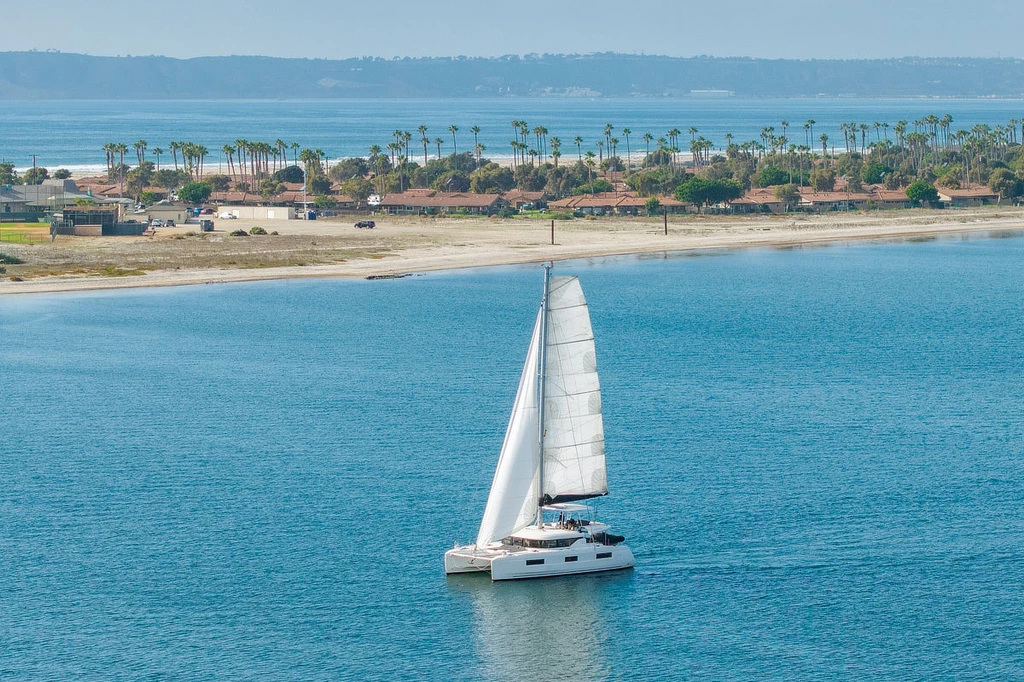
Do you qualify to skipper a charter catamaran? Charter companies weigh four things before approving a Bareboat Charters request: certification, recent sailing experience, a completed sailing resume, and how you handle their screening questions. Most first-time guests qualify with an ASA 104-level certificate and a season of real time on the water.
By Blue Pacific Yachting Team, USCG-Licensed Captains & ASA-Certified Sailing Instructors
What Certification Do You Need to Skipper a Charter Catamaran?
Certification is the floor, not the finish line. Most charter companies want to see ASA 101 (Basic Keelboat), ASA 103 (Basic Coastal Cruising), and ASA 104 (Bareboat Cruising), or the RYA equivalents: Competent Crew, Day Skipper, and Coastal Skipper. These build the core skills, sail trim, navigation, docking, anchoring, and reefing, that any yacht charter company checks for before releasing a boat to you. For a catamaran specifically, many companies also want an ASA 114 (Cruising Catamaran) course or documented multihull time, since a catamaran's twin engines, wider beam, and different point of sail handle differently from a monohull.
None of these count as a government-issued sailing license. What charter companies actually mean by that phrase is proof of competence: a certificate plus a sailing resume that shows you have used the skills recently, not just passed a class years ago.
How Much Sailing Experience Do You Need to Charter a Catamaran?
There is no single number every company enforces, and be wary of anyone who tells you otherwise. Most charter operators look for sailing experience that is both recent (typically within the last one to two years) and varied: time on a boat close in size to the one you want to charter, some overnight or multi-day passages, docking practice, and exposure to different wind and sea conditions. A single bareboat certification course alone usually is not enough; what convinces a charter company is a pattern of time on the water since that course.
How Many Days of Sailing Experience Do You Need for a Bareboat Catamaran Charter?
Many companies look for somewhere in the range of five to ten days of recent sailing, including at least one multi-day trip with overnight anchoring, before approving a bareboat catamaran charter. That is a guideline, not a hard rule: a company may waive part of it if you book a captain for the first day or two, or if your certification level already includes documented catamaran time. Ask the specific company what they count before you assume you are short.
Does Monohull Sailing Experience Count Toward Catamaran Charter Qualification?
Generally, yes. The core skills, points of sail, reading wind and current, anchoring, docking under way, transfer directly from a monohull to a catamaran, and most charter companies count monohull hours toward your overall sailing experience. What monohull time does not automatically cover is catamaran-specific handling: twin-engine docking (using engines instead of a rudder to pivot in tight marinas), a shallower draft that changes how you read depth near reefs and sandbars, and a wider beam that changes your sense of clearance at a fuel dock.
Because of that gap, several companies ask monohull sailors to complete a short catamaran checkout or an ASA 114 course before handing over a multihull, even with a strong monohull resume, since a catamaran's stability under sail can mask handling habits that a monohull's heel would have flagged immediately. That difference in feel is the main reason group charterers increasingly choose a catamaran over a monohull for cruising in the first place: wider decks, less heel, and two independent engines that make close-quarters maneuvering more forgiving once you know how to use them.
Planning a group outing in Marina del Rey?
Tell us your group size and target date and our team will confirm which vessels are available for your window.
What Is a Sailing Resume, and How Do You Fill One Out for a Charter Company?
A sailing resume is a short written record of the sailing you have actually done: boat names and types (monohull or catamaran), waterline length, dates, your role aboard (skipper or crew), locations sailed, and notable conditions, wind strength, night passages, docking situations, weather you handled. Charter companies use it alongside your certifications because a certificate tells them what you were taught; a resume tells them what you have actually practiced since.
To fill one out well, list your most recent and most relevant trips first, catamaran time above monohull time if you are chartering a catamaran, and be specific rather than vague: 'three days aboard a 42-foot catamaran in Mission Bay and along the coast, docked at three different marinas' tells a reviewer far more than 'sailed a few times last year.' BPY's own Charter Resume form is a reasonable template even if you plan to charter elsewhere: it asks for exactly the categories most companies want to see.
What Questions Do Charter Companies Ask to Verify Your Qualifications?
Beyond the paperwork, most companies run a short conversation, sometimes over the phone, sometimes as an in-person check-out sail, before they release the boat. Expect practical questions: how would you approach this dock in a crosswind, what is your plan if the wind builds past what is forecast, how do you reef, what do you do if an engine will not start. On a catamaran, add docking under power with twin engines and reading a shallower draft near a reef or sandbar.
Sailors who build this pattern deliberately, often by working through a San Diego ASA certification path before attempting a catamaran-specific checkout, tend to move through this conversation quickly. A resume that lists real hours plus clear answers to these questions is what most companies mean by bareboat charter master readiness: someone who does not need to be walked through the basics.
Do You Qualify to Skipper a Charter Catamaran? What Happens if Not
If your certification or resume comes up short, you are not stuck. Most yacht charter companies, BPY included, offer alternatives rather than a flat no: a supervised check-out sail with an instructor aboard to confirm and build your skills, a shorter refresher course focused on the gaps a reviewer flagged, or stepping the trip down to a captained charter this time while you log more sailing experience.
None of these routes should feel like a punishment. A checkout sail or a captained first trip is a normal, common step for sailors who are close but not quite there, and it usually converts into a stronger resume and a faster yes the next time you apply.
Is It Easier to Qualify to Charter a Catamaran Than a Monohull?
Do you qualify to skipper a charter catamaran more easily just because it is a catamaran? Not necessarily, and it depends on what a company is weighing. A catamaran's stability under sail, less heel, a level ride, makes early sailing experience feel more comfortable and less intimidating, which is part of why catamarans are such a popular first charter for groups and families. That comfort can make a catamaran feel easier to qualify for.
But size and cost work the other way. A catamaran is typically a larger, more expensive boat to replace or repair than an equivalent monohull, and docking one at a tight fuel dock or marina berth is its own skill that a monohull resume does not fully prepare you for. Many companies apply the same resume and certification bar to both, or ask catamaran-specific questions on top of the general ones, rather than a lower bar overall. Treat 'catamaran' and 'easier' as two separate questions when you are building your own sailing resume.
Frequently Asked Questions
Can you charter a catamaran without a sailing license?
There is usually no government-issued sailing license required for a private bareboat catamaran charter in most U.S. and Mexican waters, but do not read that as no requirements. Charter companies substitute their own screening, certification plus a sailing resume plus a short interview, for a license. Without documented experience, plan on a captained or crewed charter instead of a bareboat one.
Do ASA or RYA certifications guarantee you qualify for a catamaran charter?
No. A certification shows you completed a course and passed the required skills for that level; it does not guarantee approval on its own. Most companies still review how recent and how relevant your sailing experience is, and some ask catamaran sailors for an additional checkout regardless of certification level.
Can you hire a licensed skipper if you do not personally qualify?
Yes. A captained or crewed charter puts a qualified skipper aboard so you can still get on the water, and it is a common choice for a first catamaran trip while you build the resume a bareboat charter will eventually require. Many sailors use a captained trip specifically to gain the multihull hours a future bareboat approval needs.
Do all charter companies use the same qualification standards?
No, standards vary by company and by region. A well-established charter hub like the British Virgin Islands often uses a standardized resume form and may require a checkout sail regardless of certification, while a smaller or newer operation may rely mostly on an interview. Always ask the specific company what they require rather than assuming one company's yes applies everywhere.
Start Your Certification Path With BPY
If you are not sure where your sailing resume stands, the fastest way to find out is to start building it. Beginning Sailing (ASA 101) is where the BPY team begins every new sailor's path toward a bareboat catamaran charter, whether the goal is a private day sail or a multi-day trip to Catalina or the Sea of Cortez.
Ready to get on the water?
Send us your group size and preferred date. We will confirm availability and walk you through the option that fits.