

Sailing to Catalina from Marina del Rey: How to Charter a Private Boat for a Day Trip or Overnight
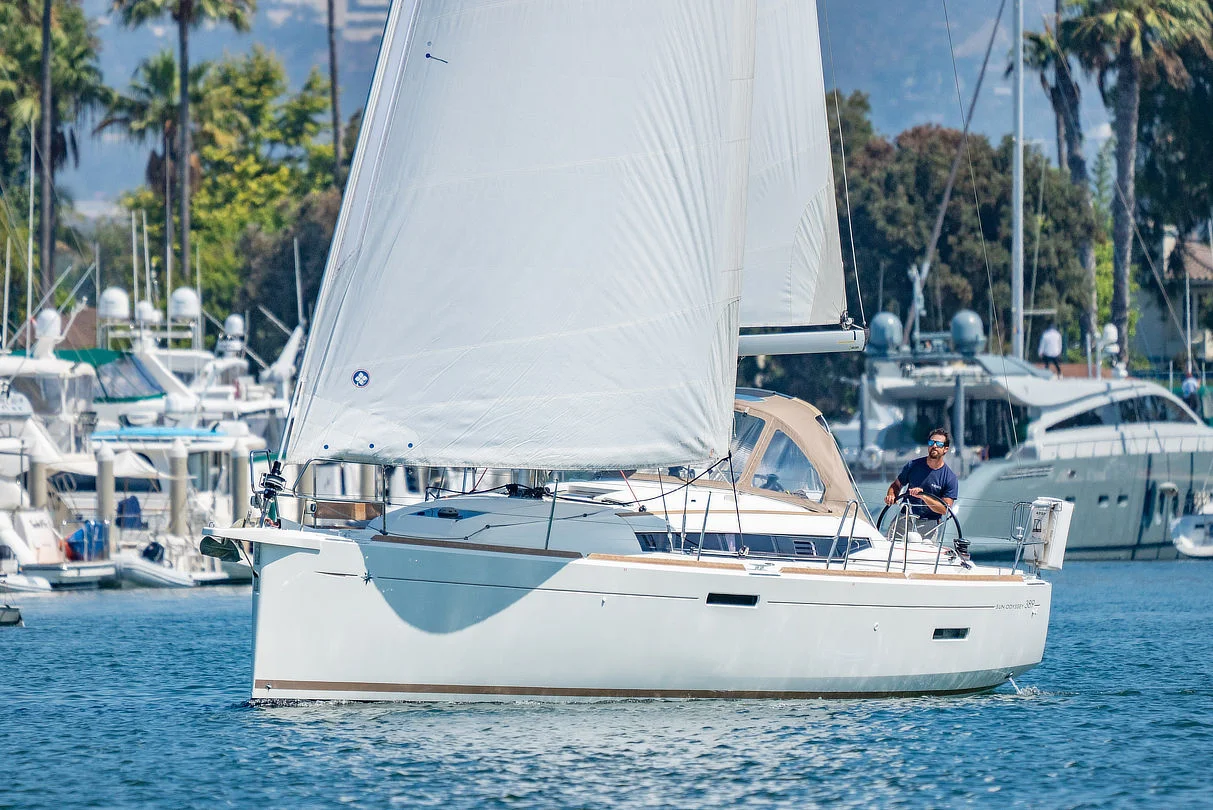
Sailing to Catalina from Marina del Rey covers about 27 to 30 nautical miles across the San Pedro Channel and takes most sailing vessels between 5 and 6 hours under sail in typical Southern California conditions. The Marina del Rey breakwater sits roughly 27 nautical miles from Two Harbors and about 30 nautical miles from Avalon. A day trip or overnight stay at either destination is realistic for sailors with the right certification and a well-found charter boat. Our Catalina Island Sailing page outlines every available option.
By Blue Pacific Yachting Team, USCG-Licensed Captains & ASA-Certified Sailing Instructors
The San Pedro Channel: What to Expect on the Crossing
The San Pedro Channel sits between the Southern California coast and the western face of Catalina Island, a stretch of open water that behaves more like the offshore ocean than the protected harbor it borders. Summer months bring reliable afternoon westerlies, typically building from 10 to 20 knots by midday, with northwest swell running 3 to 6 feet on most days. Morning fog is common from May through August, sometimes reducing visibility to near zero before burning off by mid-morning.
Commercial traffic adds a navigation layer that inland and bay sailors are not accustomed to. Vessels entering and leaving Los Angeles Harbor cross the standard Catalina sailing track, and a loaded container ship moves at 18 to 22 knots with limited turning ability. Monitoring AIS traffic and laying out your crossing track before departure is standard practice, not an optional step.
Wind shifts can happen quickly on approach to the island. The lee of Catalina creates wind shadows on certain headings, and boats working the west end of the island in summer often encounter confused seas where wind-driven swell meets chop reflected off the cliffs. Planning your approach to Avalon from the east avoids the worst of these conditions in typical summer weather.
A minimum of ASA 103 and ASA 104 certification is the accepted baseline for handling a monohull on this crossing independently. If your certifications are at ASA 101 or 102, pairing with a licensed captain for this passage is the right call, both for safety and for the offshore experience you will gain in your logbook.
Sailing to Catalina from Marina del Rey: Day Trip vs. Overnight
For most groups, sailing to Catalina from Marina del Rey is a first offshore passage that genuinely exposes them to open-water conditions. The choice between a day trip and an overnight stay is less about difficulty and more about how you want to use your time on the island.
Day Trip Logistics
A successful day trip requires an early departure. With a 5 to 6 hour crossing each way, leaving the dock at Marina del Rey between 06:00 and 07:00 gives most sailboats a realistic arrival at Avalon by early afternoon, depending on wind and point of sail. That window leaves a few hours ashore before you need to start the return passage.
Weather forecasting is the most important part of planning a day trip. Our captains recommend checking the NOAA marine forecast for zone PZZ150 the evening before and again at 04:00 on the morning of departure. An unstable forecast with strong afternoon wind is a clear signal to postpone. A day trip that becomes an unplanned night passage in building conditions is a qualitatively different experience from what most groups are expecting.
Before leaving the slip, check your engine, flares, and VHF radio. Confirm that every person aboard has a properly fitting life jacket. Brief your crew on the man-overboard procedure and the watch schedule.
Overnight and Multi-Day Charters
Spending a night at anchor or on a mooring ball changes the character of the trip. You get the sunset at anchor, mornings on the water before the ferry crowds arrive, and the option to explore Two Harbors on the western isthmus, which offers a quieter anchorage than Avalon with good snorkeling and less shore congestion.
Overnight charters also take the time pressure off the outbound passage. You are not racing the clock in both directions, and if conditions require waiting out a weather window, you have the flexibility to do so. The Multi-Day Charter With Captain option lets you build a custom itinerary with a USCG-licensed Master at the helm for the offshore legs, freeing your group to focus on the experience and build genuine offshore time in their logbooks.
Choosing the Right Charter Boat for the Passage
Matching the vessel to your group and the passage conditions is part of the planning process. Every BPY charter carries a maximum of 12 guests, the limit set by USCG regulation, regardless of the boat you choose.
Monohulls
Monohulls in the 30- to 40-foot range are the standard choice for the Catalina crossing. They point well in the prevailing westerlies, handle channel chop without difficulty, and carry enough range and tankage for a multi-day passage. Smaller monohulls in the 25-foot class are capable passage makers for competent crews in settled conditions, and they form the core of the BPY training fleet precisely because they teach sailors to handle real offshore conditions at a manageable scale.
The Beneteau 35.5 in the BPY fleet provides comfortable berths for an overnight trip, a proper galley for provisioning, and sail area that makes efficient use of the afternoon sea breeze on the return leg.
Catamarans
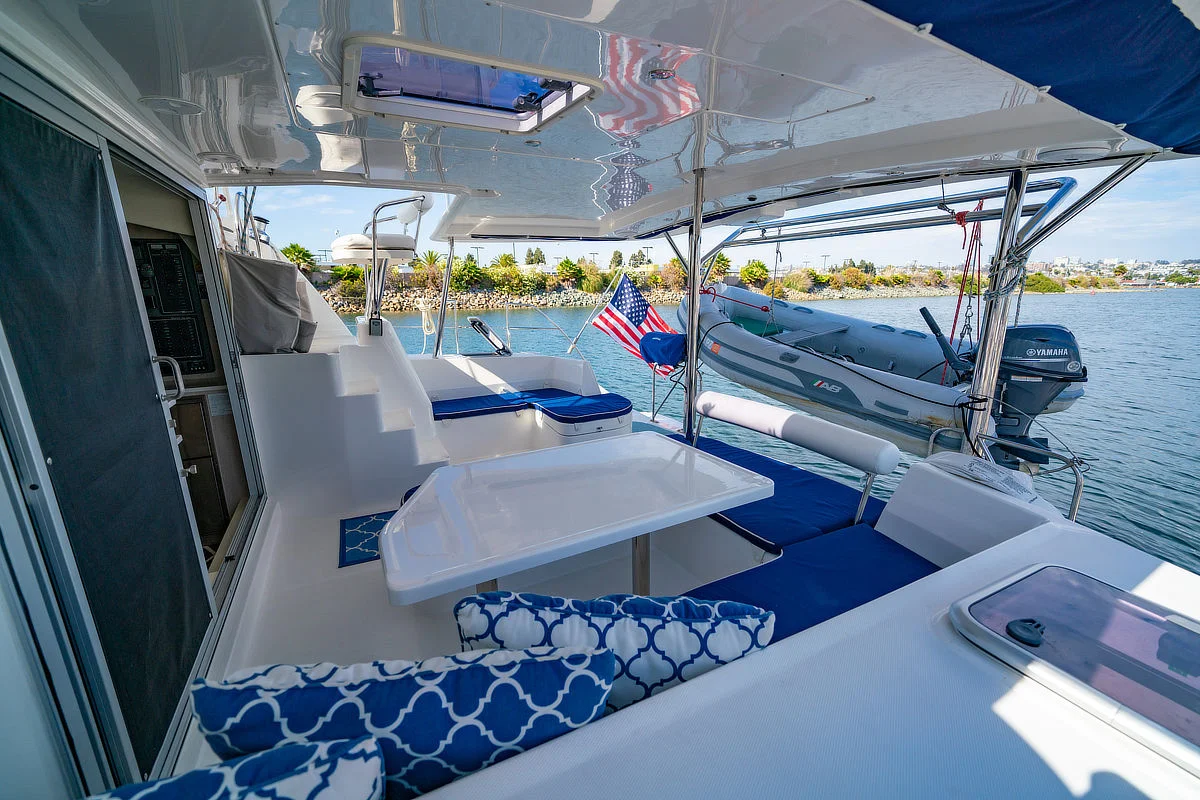
Catamarans have grown steadily more popular for the Catalina run because of the stability at anchor and the living space they provide. A cat sits level on a mooring ball, which makes overnight comfort considerably better than a heeling monohull. The tradeoff is pointing ability upwind. In a building westerly, the passage plan for a catamaran needs to account for extra leeway, particularly on a course with any upwind component.
Larger catamarans in the 43-foot range offer separate cabins, full headroom throughout, and cockpit space that makes the crossing feel less like a working sail and more like a floating base camp. As with every vessel in the fleet, the guest count tops out at the USCG maximum of 12.
Planning a group outing in Marina del Rey?
Tell us your group size and target date and our team will confirm which vessels are available for your window.
Bareboat Charter vs. Captain-Led Charter: Which Option Fits
Charter structure determines what your crew needs to bring to the dock in terms of certification and experience.
Bareboat Charter
A bareboat puts your crew in command. You handle navigation, sail trim, anchoring, and all seamanship duties. BPY requires a charter resume documenting offshore experience, valid ASA certification appropriate to the vessel class, and a successful checkout sail with one of our instructors before you take a bareboat to Catalina. Our bareboat charter option is the most flexible path for sailors ready to make the crossing independently.
Qualification standards are firm for this passage. ASA 103 and ASA 104 are the accepted minimums for a monohull bareboat on the offshore crossing. Catamaran charters require completion of a cruising catamaran course or equivalent documented offshore experience. If your certifications fall short, a captain-led charter this trip is the better path toward building the logbook for future bareboat qualification.
Captain-Led Charter
A captain-led charter puts a USCG-licensed Master at the helm for the offshore legs. Your group can participate in sailing as much or as little as they want, and the captain handles departure timing, weather calls, mooring pickup, and docking. This option works well for mixed-experience groups, corporate outings, and celebrations where the priority is the experience rather than demonstrating seamanship independently.
Our captains are ready to provide informal instruction during the passage for any crew members who want to learn, which makes a captain-led Catalina charter a productive way to build offshore experience whether or not your group has formal training.
Anchoring and Mooring at Catalina Island
Catalina has two primary destinations for visiting sailors: Avalon Harbor and Two Harbors on the western isthmus. Both are worth understanding before you make the crossing.
Avalon Harbor
Avalon is the main town on the island, with restaurants, shops, kayak and paddleboard rentals, and the historic Casino building that anchors the harbor. Moorings in Avalon are managed by the Catalina Island Company on a first-come, first-served basis with a nightly fee collected through the harbor launch service. Anchoring in the main harbor is restricted in most of the inner area, and picking up a mooring is the standard arrangement for visiting boats.
Getting ashore from a mooring requires using the harbor launch or having a dinghy aboard. Plan for this transit time when estimating how long your group will have ashore on a day trip.
Two Harbors
Two Harbors sits on the narrow isthmus that nearly divides the island and offers a quieter experience than Avalon. The mooring field here is also managed by the Catalina Island Company. The anchorage is ringed by kelp beds and provides reliable snorkeling and diving conditions on most days. Shore facilities are limited compared to Avalon, which is part of the draw for sailors looking for a more remote anchorage.
Reaching Two Harbors on a day trip from Marina del Rey is possible in favorable conditions but requires an early start and a firm commitment to the schedule. Most visitors arrive as part of an overnight or multi-day charter.
What to Pack for the Crossing
Layering is essential on the Southern California coast. Morning fog and afternoon sun require different gear, and the temperature on the water is routinely 10 to 15 degrees cooler than at the dock. Sunscreen, polarized sunglasses, and a windproof outer layer are the minimum personal kit for any San Pedro Channel crossing.
For navigation and safety: bring a current chartplotter or NOAA chart, a VHF radio (required on all BPY charters), properly fitting life jackets for every person aboard, and flares. File a float plan with a shore contact before departure. A float plan can be as simple as a text that includes vessel name, departure time, destination, expected arrival time, number of people aboard, and instructions to call the Coast Guard if the contact has not heard from you by a specific time.
For provisioning, bring more than you expect to use. Motion sickness is more common in the San Pedro Channel than first-time offshore sailors typically anticipate. Staying hydrated, remaining on deck in fresh air, and keeping something in your stomach are the most consistent strategies. Over-the-counter antihistamine-based medications and ginger supplements both have evidence supporting their use; either option is more effective when taken before symptoms appear rather than after onset.
Frequently Asked Questions
How long does it take to sail to Catalina from Marina del Rey?
Catalina sits about 27 to 30 nautical miles from the Marina del Rey breakwater, roughly 27 nautical miles to Two Harbors and 30 to Avalon. Most sailboats cover that crossing in 5 to 6 hours, depending on wind, point of sail, and the vessel's waterline length. Plan your departure time so you are not arriving in the dark unless you have a deliberate plan for a night passage with a crew experienced enough to handle it.
What certifications do I need to bareboat charter to Catalina?
BPY requires ASA 103 and ASA 104 for a monohull bareboat on the Catalina crossing, along with a charter resume showing relevant offshore experience. Catamaran charters require completion of a cruising catamaran course or equivalent. Sailors short of these requirements have the option of a captain-led charter to build offshore time and log hours toward future bareboat qualification.
Can I anchor overnight at Catalina?
Anchoring in Avalon Harbor is restricted in most of the inner area; visiting boats typically pick up a mooring through the harbor launch service at a nightly fee. At Two Harbors, anchoring outside the mooring field is possible in settled conditions, but a mooring is the more reliable option for overnight stays.
What is the best time of year for the Catalina crossing?
May through October generally offers the most consistent conditions, with reliable afternoon westerlies and settled weather. Fall, particularly September and October, tends to bring pleasant temperatures and lighter traffic on the island. Winter passages are manageable for experienced sailors but require careful attention to frontal systems that can arrive with limited warning from the north.
Do I need to reserve a Catalina mooring in advance?
Moorings at both Avalon and Two Harbors are first-come, first-served and cannot be reserved in advance through the harbor service. Arriving earlier in the day gives you better mooring selection. Summer weekends are the busiest period; plan to arrive by mid-morning if you want a good location in Avalon.
Plan Your Catalina Passage With the Blue Pacific Yachting Team
Whether you are ready to make the offshore crossing on your own or want a licensed captain at the helm while your crew takes in the channel, we can build a charter that fits your group and your goals. Connect with us through the Catalina Island & Catamaran Sailing page to review current options and availability.
Ready to get on the water?
Send us your group size and preferred date. We will confirm availability and walk you through the option that fits.