

Best Time of Year to Sail the Sea of Cortez (Loreto Sailing Season Guide)
The best time of year to sail the Sea of Cortez, using Loreto as a base, runs October through May, with November through April as the premium window. Whether you are planning Bareboat Charters in Baja or a fully crewed charter on the BPY Loreto fleet, these months deliver settled weather, reliable wind angles, and some of the most spectacular anchorages in North American waters.
By Blue Pacific Yachting Team, USCG-Licensed Captains & ASA-Certified Sailing Instructors
Why Loreto Is the Ideal Base for Sea of Cortez Sailing
Loreto sits roughly midway along the western shore of the Sea of Cortez, sheltered by the Sierra de la Giganta mountains and fronted by the Loreto Bay National Marine Park. The park encompasses five main islands: Coronado, Carmen, Danzante, Monserrat, and Santa Catalina. This cluster of desert islands creates a sailing ground compact enough for day sails yet varied enough to hold a cruising boat for weeks.
Jacques Cousteau called the Sea of Cortez 'the world's aquarium,' and the Loreto section earns that reputation fully. Manta rays, whale sharks, dolphins, sea lions, and blue whales pass through these waters seasonally. For sailors, the appeal extends beyond wildlife: anchorages are protected, holding ground is generally firm sand, and the distances between islands suit both short passages and long afternoons at anchor.
Loreto also has practical advantages for visiting cruisers. Blue Pacific Yachting bases its Loreto fleet at Marina Puerto Escondido, just south of town, which puts the central island anchorages within an easy morning's reach of the dock. Loreto International Airport provides a straightforward crew change option, a practical consideration on charters that rotate guests. Provisioning is straightforward at local supermarkets, and the municipal market carries fresh fish and produce year-round.
When Is the Best Time of Year to Sail the Sea of Cortez?
The short answer is October through May, with the most consistent and comfortable conditions running November through April. Sea of Cortez sailing divides naturally into four windows based on weather patterns, wind reliability, and tropical storm risk.
October and November: Fall Transition
October marks the end of the chubasco season, the period of tropical moisture and fast-developing squalls that makes summer sailing in the Gulf genuinely risky. By late October, conditions stabilize quickly. Daytime temperatures drop from summer highs into the low 80s Fahrenheit, humidity falls sharply, and the first northern winds begin pushing down the Gulf.
November offers a strong entry point for the Loreto sailing season. Water temperatures remain warm enough for swimming and snorkeling. Winds run from the north-northwest at 10 to 18 knots on most days. Swells are minimal compared to the Pacific side of Baja, and anchorages are quieter than they will be during the peak January and February months.
December Through February: Core Winter Season
This is the heart of the best time of year to sail the Sea of Cortez. Air temperatures average in the high 60s to mid-70s Fahrenheit during the day, dropping to the low 50s at night. The prevailing pattern is a steady north-northwest flow interrupted by periodic norte events, which are cold-front-driven bursts that can run 25 to 35 knots for 24 to 72 hours before settling.
Blue whales concentrate in the channel south of Loreto between December and March, making this the most compelling wildlife window on the Baja coast. Anchorages at Honeymoon Cove on Isla Coronado and Puerto Balandra on Isla Carmen see steady traffic from cruising fleets in January and February, so arriving mid-week and anchoring early in the day is sound practice.
March Through May: Spring Prime Time
Spring delivers warmer air and water temperatures, lighter average wind speeds, and exceptional underwater visibility. Many sailors who spend the core winter in La Paz or the southern Gulf work their way north through spring, stopping at the islands around Loreto before continuing toward the northern Sea of Cortez or heading back toward the Pacific.
May is the final reliable month before humidity climbs again. Winds become variable and less consistent, which favors motoring in the mornings and catching afternoon sea breezes. Water temperature reaches the low 70s Fahrenheit, making snorkeling and freediving comfortable without a full wetsuit.
June Through September: Chubasco Season
Tropical moisture from the eastern Pacific pushes into the Gulf of California beginning in late June. Chubascos are fast-developing squall lines that can produce waterspouts, 40-plus-knot gusts, and driving rain with little warning. This period coincides with eastern Pacific hurricane season, and storm tracks can directly affect the central Gulf.
The BPY captains recommend that sailors without experience in tropical weather systems avoid the Sea of Cortez from June through September. The risk profile changes significantly compared to the November through April window, and conditions in the central Gulf can deteriorate quickly during the chubasco months.
Planning a group outing in the Sea of Cortez?
Tell us your group size and target date and our team will confirm which vessels are available for your window.
Wind Patterns and Sailing the Loreto Cruising Grounds
The Loreto cruising grounds reward sailors who understand the daily wind cycle. From November through March, the dominant pattern is a north-northwest flow that sets up clean reaching angles between the islands, interrupted periodically by norte events that demand an alert anchor watch and conservative anchorage choices.
Because the BPY fleet is based at Marina Puerto Escondido, you skip the long offshore delivery down the Baja Pacific coast and start sailing the islands the same day you arrive. That means more of your time goes toward the part that matters: reaching between Isla Carmen, Isla Danzante, and Isla Coronado on a steady afternoon breeze, then settling into a protected anchorage before the wind builds.
Routing tools and dedicated weather services have improved local passage planning considerably, but the BPY captains still recommend an alert watch for norte arrivals and a conservative approach to anchorage selection during the winter front season. For guests building toward independent cruising, our Catalina Island Sailing program offers a practical platform for developing watch routines, sail-handling technique, and passage discipline before chartering in Baja.
Preparing Your Charter and Crew for Loreto
A successful Sea of Cortez cruise depends as much on crew readiness as on conditions. When you charter the BPY Loreto fleet, the vessel clearance and permitting are already handled, since the boats are based at Marina Puerto Escondido. If you bring your own foreign-flagged vessel into Mexican waters, you will need a temporary import permit for the vessel, a tourist card for each crew member, and a cruising permit from the Mexican port captain. These documents are straightforward to obtain but require lead time: plan to process them at your first Mexican port of entry, typically Ensenada or Cabo San Lucas, and build in at least one full day there.
On the vessel side, solid ground tackle, an alert anchor watch, and a well-stocked first-aid kit are essentials for extended cruising in remote anchorages. Loreto Bay National Marine Park prohibits anchoring on reef structures, so good scope technique and an alert anchor watch during afternoon thermal winds matter throughout the park boundaries.
For sailors building their credentials, completing ASA 103 (Basic Coastal Cruising) and ASA 104 (Bareboat Cruising) before a charter provides both the skills and the documented certification that supports an independent booking.
Frequently Asked Questions
Is the Sea of Cortez safe for beginner sailors?
The Sea of Cortez offers manageable conditions for sailors with solid coastal cruising experience, and chartering the Loreto-based BPY fleet removes the most demanding part of a Baja trip, the long offshore approach down the Pacific coast. Beginners are best served by a captained charter, where a USCG-licensed captain handles routing and anchoring while you build local knowledge. Sailors planning to charter independently should hold ASA 101 through 104. The Loreto sailing season is forgiving once you are on the water.
How long does a Loreto sailing trip typically take?
Because the fleet is based at Marina Puerto Escondido, you can plan a rewarding Loreto charter in as little as a long weekend, with the central island anchorages reachable in a single morning. Many guests book a week to ten days to explore Loreto Bay National Marine Park at a relaxed pace. Norte events can shift a daily itinerary by a day depending on how the wind cycle aligns with your plans.
Do I need a Mexican cruising permit?
If you charter the BPY Loreto fleet, the vessel is already cleared and based at Marina Puerto Escondido, so you do not handle vessel importation yourself. If you bring your own foreign-flagged vessel into Mexican waters, you will need a temporary import permit and a cruising permit obtained through the Mexican port captain system at the first port of entry, with Ensenada the most common approach for boats originating in Southern California.
What type of boat handles the Sea of Cortez best?
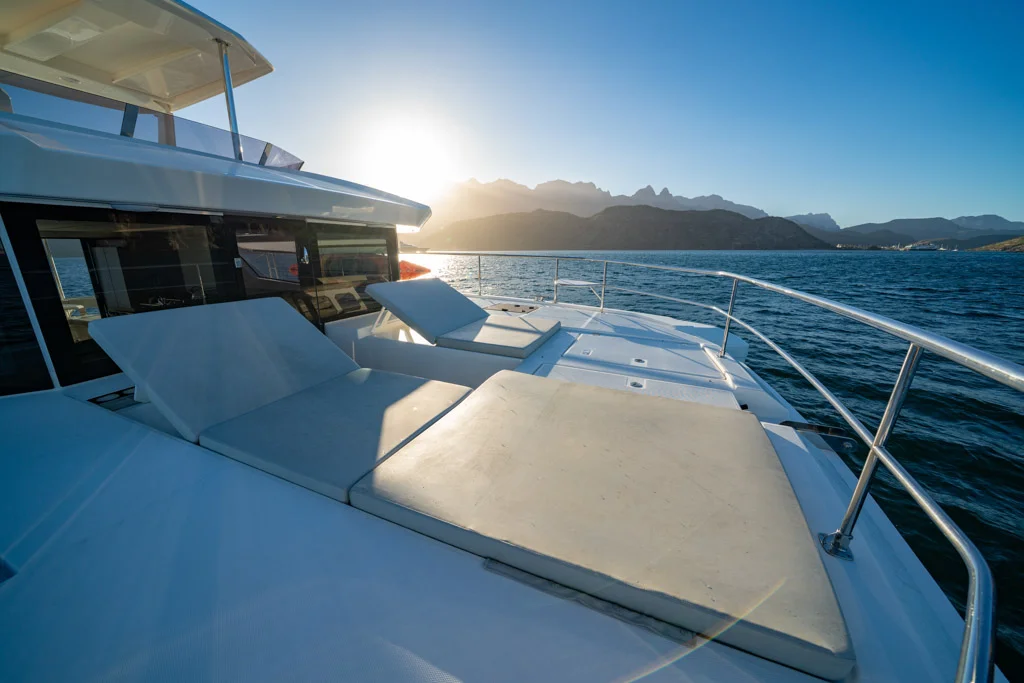
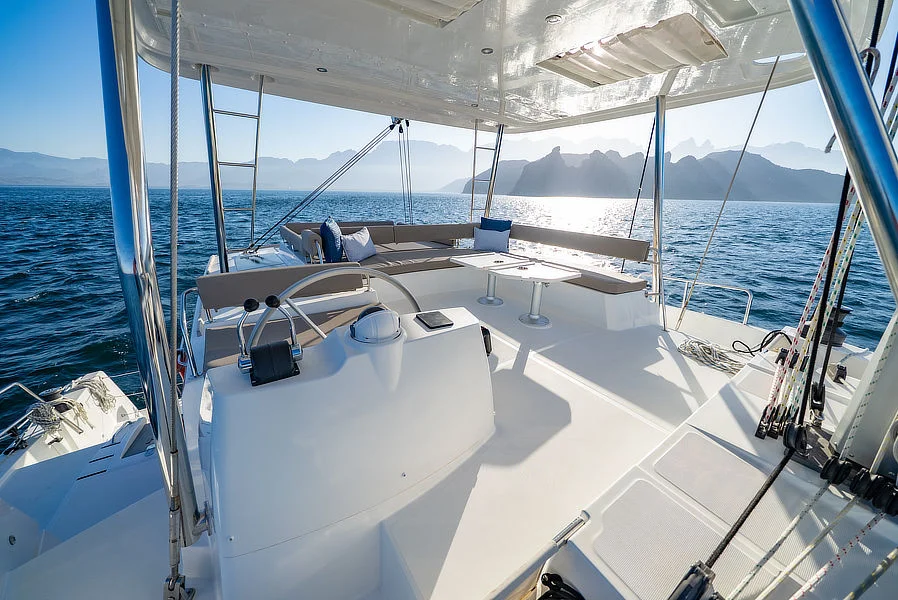
Catamarans excel in the Cortez for their shallow draft and open deck space, which is why the BPY Loreto fleet is catamaran-based. Pelican Bleu, our Bali 4.8 based in Loreto, is a strong example of the type of stable, comfortable cruising catamaran suited to extended Sea of Cortez cruising, with a roomy solid foredeck and cushioned lounge for relaxing at anchor. Mi Sueno, an Excess 11, and Hamlet, a Leopard 46 power catamaran, round out the fleet for different cruising styles.
When do blue whales visit the waters near Loreto?
Blue whales typically concentrate in the channel between Loreto and Isla Carmen and in the deeper water south of Loreto from December through March. This is among the most reliable areas in the world for close-range encounters with the largest animal ever to have lived, and the timing aligns squarely with the best months for Sea of Cortez sailing.
Plan Your Baja Charter With the BPY Team
The best time of year to sail the Sea of Cortez coincides with prime conditions on our Loreto-based fleet at Marina Puerto Escondido. Check the Sailing School Calendar to find the courses and cruising clinics that fit your target travel window, and reach out to match your group to the right vessel in the fleet.
Ready to get on the water?
Send us your group size and preferred date. We will confirm availability and walk you through the option that fits.