

Learn to Sail Vacation: Earn Your ASA Certification on a Catalina Liveaboard
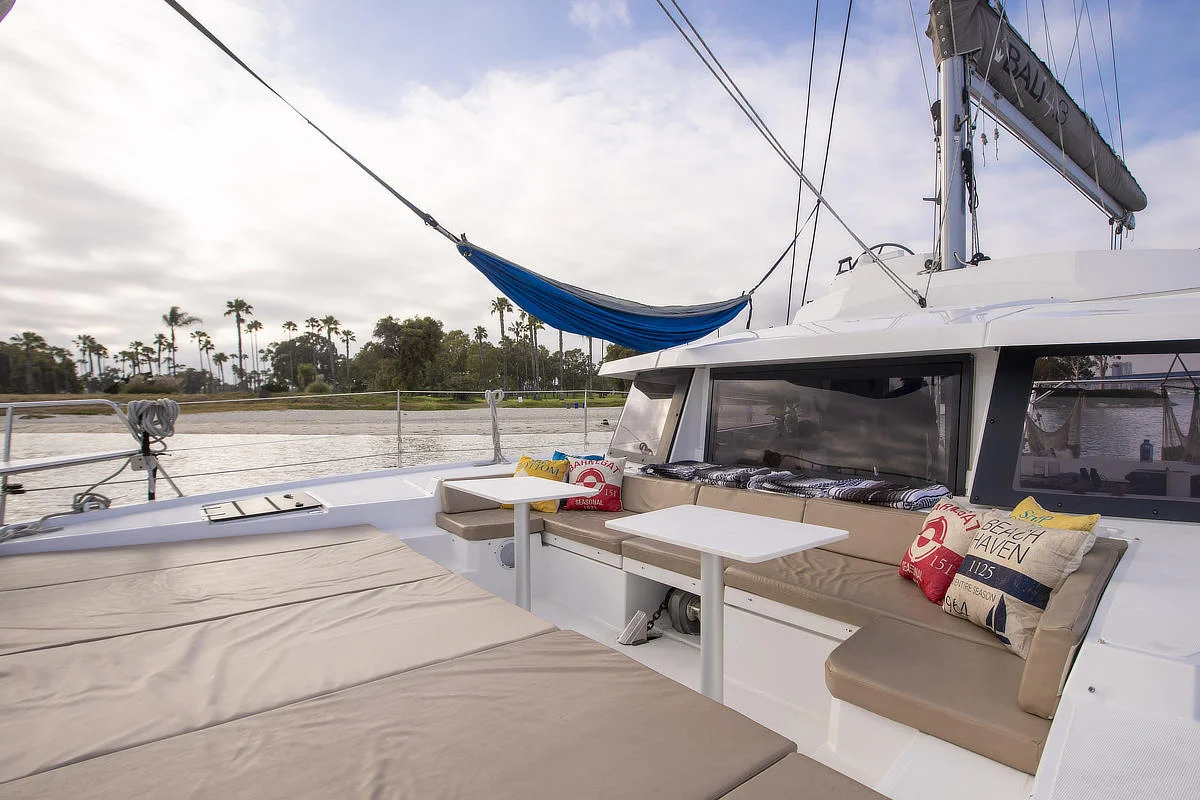
A learn to sail vacation with Blue Pacific Yachting means more than a relaxing time on the water: after earning your basic keelboat certification, you spend five days building real offshore skills on a liveaboard passage from Marina del Rey to Catalina Island. Start with Beginning Sailing (ASA 101) on the water at our base, then step aboard the liveaboard and return home with documented offshore miles and credentials that open bareboat charters worldwide.
By Blue Pacific Yachting Team, USCG-Licensed Captains & ASA-Certified Sailing Instructors
What a Learn to Sail Vacation Actually Looks Like
A learn to sail vacation in the BPY format is structured as an intensive certification program, not a cruise with some sailing mixed in. Before the liveaboard, you complete your ASA 101 (Basic Keelboat) foundation on our Capri 22 keelboats in protected water, where our instructors cover ground school fundamentals and get you handling the boat in benign conditions: tacking, jibing, heaving-to, and basic dock work. With that baseline in hand, you join the liveaboard ready to apply those skills on an actual passage.
The five-day liveaboard typically makes the Catalina crossing on the first full day, departing Marina del Rey in the early morning to time the westerly wind window. The crossing runs about 27 to 30 nautical miles across the San Pedro Channel, about 27 nm to Two Harbors and 30 nm to Avalon, and typically takes about 5 to 6 hours under sail, depending on conditions. Students rotate through navigation duties, sail trim, and watch-keeping, with the instructor stepping in to teach rather than take over.
Nights at anchor in Isthmus Cove or Avalon Harbor give the program its liveaboard character. You cook aboard, manage the anchor watch, and work through the ambient logistics of living on a boat: condensation, water conservation, power management, and the steady adjustment that comes from sleeping in a seaway. These are the skills that make a sailor functional on any vessel anywhere, and they only come from actual time aboard.
The program ends with a return passage to Marina del Rey, which adds a second open-water crossing in potentially different conditions. Students who complete both crossings typically arrive back at the dock with a calibrated sense of their own confidence, a clear picture of what they need to work on next, and their ASA certification paperwork in hand.
Which ASA Certifications You Can Earn
The most popular offering is the 5-day all-inclusive Catalina liveaboard, which covers ASA 103 (Basic Coastal Cruising), ASA 104 (Bareboat Cruising), and ASA 114 (Cruising Catamaran). The path begins with ASA 101 on the Capri 22 first, then the liveaboard builds on that foundation with real coastal and offshore time.
ASA 101 (the prerequisite) is the entry point, earned on our Capri 22 basic keelboats before the liveaboard. It covers the points of sail, basic sail trim, right-of-way rules under the COLREGS, knot work, and boat-handling at the dock. The certification includes both a written and practical exam, and students are assessed individually on every tested skill. Completing 101 first means you board the liveaboard ready to work at the coastal-cruising level rather than starting from scratch.
ASA 103 moves into offshore passage planning, weather interpretation, anchoring technique, reefing under load, and overnight watch-keeping. The Catalina liveaboard format satisfies the practical requirements for ASA 103 as a natural consequence of making an actual passage: you are not rehearsing these skills in a marina, you are executing them on open water.
ASA 104 covers what is required to charter a boat without a captain: provisioning planning, systems checks, docking in unfamiliar slips, and independent navigation. This level prepares students to leave the trip ready to book a bareboat in the Caribbean or Mediterranean.
ASA 114 is the cruising catamaran certification. Because the Catalina training fleet is catamarans, the liveaboard is an ideal setting to add 114, building the catamaran-specific instincts for sail trim, maneuvering, and docking that differ meaningfully from monohull handling.
Students who want to continue building competency after the liveaboard experience can add to those offshore miles through Intermediate Sailing (ASA 103/104), which provides structured follow-up coursework for students who want additional coastal time before reaching independent charter standards.
Why the Catalina Liveaboard Format Works
Research on contextual interference, first described by Shea and Morgan in a 1979 study published in the Journal of Experimental Psychology: Human Learning and Memory, demonstrated that variable practice conditions produce better long-term skill retention than blocked practice in a single unchanging context. The liveaboard format applies this directly: students trim sails in the marina at dawn, manage open-water swell on the crossing, reef in an afternoon puff, and handle an anchorage arrival at last light. Each repetition occurs in a new context, which accelerates durable skill acquisition.
The overnight element introduces seamanship that day sailing cannot replicate. Night watch routines require students to maintain situational awareness using instruments, running lights, and radar returns rather than visual landmarks. Anchor watch responsibilities teach both vigilance and a calm, methodical response to subtle position changes. The low-light situational awareness that experienced offshore sailors treat as foundational comes only from standing actual watches, not from reading about them.
Catalina also introduces a genuine planning problem. Reading anchorage conditions at Isthmus Cove, monitoring NWS marine forecasts for the return passage, and managing the tender in surge at the Avalon landing dock are real logistical challenges with real consequences. Our USCG-licensed captains narrate the decision-making process as it happens, giving students a transferable framework they can apply independently at any anchorage.
The Southern California environment adds useful variability across a single trip. Marine layer burns off by midmorning, afternoon westerlies build across Santa Monica Bay, and the Catalina Channel can produce short steep swell when northwesterly groundswell wraps around Point Vicente. Students who complete a Catalina liveaboard have encountered a representative sample of coastal Pacific sailing conditions.
Planning a group outing in Marina del Rey?
Tell us your group size and target date and our team will confirm which vessels are available for your window.
Training on the Catalina Catamaran Fleet
The Catalina training fleet is catamarans, and that shapes both the learning experience and the liveaboard comfort. A catamaran provides superior stability and living space, which makes a multi-day liveaboard program far more manageable. A catamaran does not heel, so cooking, sleeping, and working on deck during a passage require less physical adaptation for students who are simultaneously managing unfamiliar skills. The cabin layout gives a group private sleeping quarters and a full galley without crowding.
Training on a catamaran also lines up directly with the ASA 114 cruising catamaran certification you earn on the liveaboard. You build the instincts for catamaran sail trim, maneuvering, and docking from the start, which is exactly what the 114 curriculum assesses. For students who plan to charter catamarans after certification, the most common path in modern bareboat fleets, this is the most relevant possible platform to learn on.
What to Pack and How to Prepare Before You Arrive
Preparation matters more on a sailing vacation than on most travel. Students who arrive having studied the ASA 101 textbook consistently move through the ground school faster, which leaves more time for hands-on instruction on the water.
Study before you arrive. Work through the ASA 101 textbook and workbook at home. Instructors move faster when students already know port from starboard, understand the points of sail in theory, and can identify the basic parts of the rigging. Arriving with the vocabulary in place means your first day is spent sailing, not reading.
Practice your knots. The bowline, cleat hitch, and clove hitch appear most often in real sailing situations. Practice them until the motions are automatic. Tying a bowline in the dark with cold hands during an anchorage arrival is a different exercise than tying one at a kitchen table.
Pack correctly. Soft-sided duffel bags are mandatory on a sailboat. Hard-sided luggage does not fit through hatches or compress into sail lockers. Bring layers rather than bulk: a synthetic base layer, a fleece mid-layer, and a waterproof foul-weather jacket cover the full temperature range from a foggy marina morning to a warm Catalina afternoon and back to a cool anchorage evening.
Seasickness prevention. The San Pedro Channel crossing is open-ocean sailing. Not everyone gets seasick, but the conditions can produce short steep swell that affects sailors with no prior history of motion sickness in other contexts. Consult your physician before the trip about prescription options. Scopolamine patches require a prescription and should be applied the evening before departure if your physician recommends them. Over-the-counter options work for some sailors. Hydration, fresh air, and keeping eyes on the horizon are the most reliable tools available without a prescription.
Essential items to bring:
- Valid government ID (required for all offshore passages)
- Non-skid boat shoes with rubber soles (no black-soled shoes that mark decks)
- Sunscreen rated SPF 50 or higher (reef-safe formulations preferred at Catalina)
- Personal medications and any specific first-aid requirements
- Polarized sunglasses (reduces glare on the water and helps read sea state)
Frequently Asked Questions
Do I need prior sailing experience to book a learn to sail vacation?
No prior sailing experience is required. The path starts with ASA 101 on our Capri 22 keelboats, which is built for complete beginners, and then moves to the 5-day Catalina liveaboard for ASA 103, 104, and 114. Students who arrive with some prior time on the water typically move through the early material more quickly, but the assessment standards are identical for everyone regardless of background.
How do I know whether I will get seasick on the Catalina crossing?
There is no reliable way to predict individual susceptibility before the passage. The crossing is about 27 to 30 nautical miles of open water, about 27 nm to Two Harbors and 30 nm to Avalon, and conditions vary by season and daily forecast. Our captains recommend consulting a physician before booking if you have a history of motion sickness in any context. Staying on deck in fresh air, keeping your eyes on the horizon, and maintaining hydration reduce severity for most people.
What happens if weather prevents the offshore passage to Catalina?
Safety decisions rest with the captain in command, and no educational objective overrides crew safety. If conditions make the crossing inadvisable, the program shifts to intensive coastal instruction in Southern California waters and the liveaboard element is adapted accordingly. All ASA practical and written requirements can be met without the offshore passage, and our instructors ensure every tested skill is covered regardless of routing changes.
Is an ASA certification recognized by international charter companies?
ASA certifications are recognized by the large majority of bareboat charter operators in the Caribbean, Mediterranean, South Pacific, and other major sailing destinations. They are also accepted as documented competency for insurance purposes by most charter operators. Some countries require additional local endorsements for their waters; our team can advise on specific destinations when you book.
Can I earn ASA 103, 104, and 114 on the Catalina liveaboard?
Yes. The 5-day all-inclusive Catalina liveaboard is our most popular offering and is built to deliver ASA 103, 104, and 114 for students who arrive having completed ASA 101 on the Capri 22 first. Our captains assess readiness early and advise honestly on the pace that fits each student, so you complete the levels you are prepared for within the time available.
Reserve Your Spot on a Catalina Liveaboard Certification Trip
A learn to sail vacation built around ASA certification gives you permanent credentials, documented offshore miles, and the practical experience to book a bareboat charter at your next destination. Review available dates, vessel options, and program details through our Sailing Class Info page, or contact the BPY team directly to discuss which certification levels fit your timeline and goals.
Ready to get on the water?
Send us your group size and preferred date. We will confirm availability and walk you through the option that fits.