

Sailing in the Sea of Cortez: A Complete Charter Guide to Loreto and Baja’s Best Anchorages
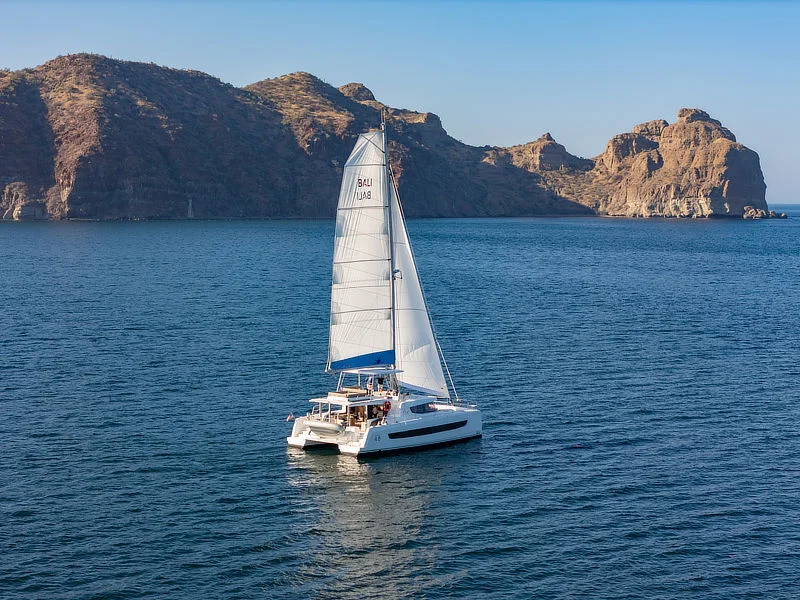
The Sea of Cortez ranks among the finest blue-water sailing destinations in the Western Hemisphere, offering warm anchorages, reliable winter trade winds, and extraordinary marine diversity. For sailors considering a Multi-Day Charter With Captain out of Loreto, sailing in the sea of cortez delivers an adventure that rewards careful preparation and solid seamanship fundamentals.
By Blue Pacific Yachting Team, USCG-Licensed Captains & ASA-Certified Sailing Instructors
Why the Sea of Cortez Offers World-Class Blue-Water Sailing
The Sea of Cortez, also called the Gulf of California, stretches roughly 700 nautical miles between the Baja California Peninsula and the Mexican mainland. Jacques Cousteau documented its extraordinary marine biodiversity in the 1960s and famously called it "the world's aquarium," a description that holds true today. Whale sharks, manta rays, sea lions, and gray whales are routinely encountered along the Baja east coast, particularly between December and April when gray whales transit south to their breeding lagoons in the Pacific.
For sailors, the Cortez offers something the Pacific coast of Baja does not: fetch-limited anchorages, shorter wave periods, and thermal wind predictability that makes day-sailing between islands manageable for crews of moderate experience. The dominant weather features are the Coromuel, a warm afternoon thermal that builds in the La Paz corridor and generates 15 to 25 knot southwesterlies on most afternoons, and the Norte, a cold continental outflow that sweeps south from the U.S. desert Southwest with little warning during December through February.
Norte events are the primary weather hazard for Cortez cruisers. Wind speeds in a strong Norte can reach 35 to 45 knots in the northern Gulf and 25 to 35 knots in the Loreto corridor. Experienced passage-makers track forecast models from the National Weather Service and Mexican meteorological services, maintain contact with other cruisers on SSB radio nets, and position their vessels in protected anchorages before a Norte arrives. Boats caught in open water during a Norte face steep, confused seas and difficult sail handling conditions.
The most accessible way to experience the Cortez is to charter from within it. Blue Pacific Yachting bases a Loreto fleet at Marina Puerto Escondido, so you can start sailing the islands the morning you step aboard rather than committing to a long delivery passage from the mainland. Our Loreto vessels include Pelican Bleu, a Bali 4.8 cruising catamaran, Mi Sueno, an Excess 11 catamaran, and Hamlet, a Leopard 46 power catamaran. Each is positioned to put the central Cortez anchorages within an easy day's reach of the dock.
The cruising season runs from November through April. Summer months bring extreme heat and active hurricane season from June through October, which effectively closes the region to offshore yacht traffic. Booking a November through April charter positions you well for the full season, with settled weather, active wildlife, and the most comfortable anchorage conditions of the year.
Loreto and the Islands: Anchor Points Worth Knowing
The Loreto area in the central Cortez is the geographic heart of the most rewarding cruising in the region. The Loreto Bay National Marine Park protects a cluster of five islands, including Isla Carmen, Isla Danzante, Isla Coronados, Isla Monserrate, and Isla Santa Catalina, that offer dozens of protected anchorages within a compact cruising area of roughly 40 by 20 nautical miles. A yacht based at Marina Puerto Escondido can spend two weeks exploring these anchorages without repeating a single overnight stop.
Isla Carmen
Isla Carmen is the largest island in the Loreto park, approximately 18 nautical miles long and 6 nautical miles wide. The old salt mine at Bahia Salinas on the island's western shore is a historical landmark and a worthwhile day hike. The anchorage at Puerto Balandra, on the island's northern end, is well protected from northwest winds and offers good holding in sand over 15 to 20 feet. Most cruisers spend two nights at Balandra, using the time to hike the volcanic ridgeline and snorkel the rocky points.
Isla Danzante and Los Candeleros
Isla Danzante sits about 5 nautical miles south of Loreto, separated from the mainland by a narrow channel. The anchorage on the island's northwest corner is shallow and subject to surge in northerly conditions, but calm mornings make this one of the best free-diving locations in the park. Los Candeleros, two volcanic rock pinnacles south of Danzante, are a popular day-sail target with strong underwater topography and excellent visibility.
Bahia Agua Verde
Bahia Agua Verde, approximately 45 nautical miles south of Loreto, is accessible by a 7-hour coastal passage from Marina Puerto Escondido. The anchorage is large and well protected from northwest winds, surrounded by desert mountains that produce spectacular dawn light. A small fishing village at the head of the bay supplies fresh produce and supplies. Agua Verde is the kind of place that causes sailors to extend their cruising plans by a week.
Planning a group outing in the Sea of Cortez?
Tell us your group size and target date and our team will confirm which vessels are available for your window.
Planning Your Loreto-Based Charter
Because the fleet is already in the Cortez, your planning shifts away from a long delivery and toward making the most of your time on the water. Most guests fly into Loreto International Airport, a short transfer from Marina Puerto Escondido, and step aboard the same day.
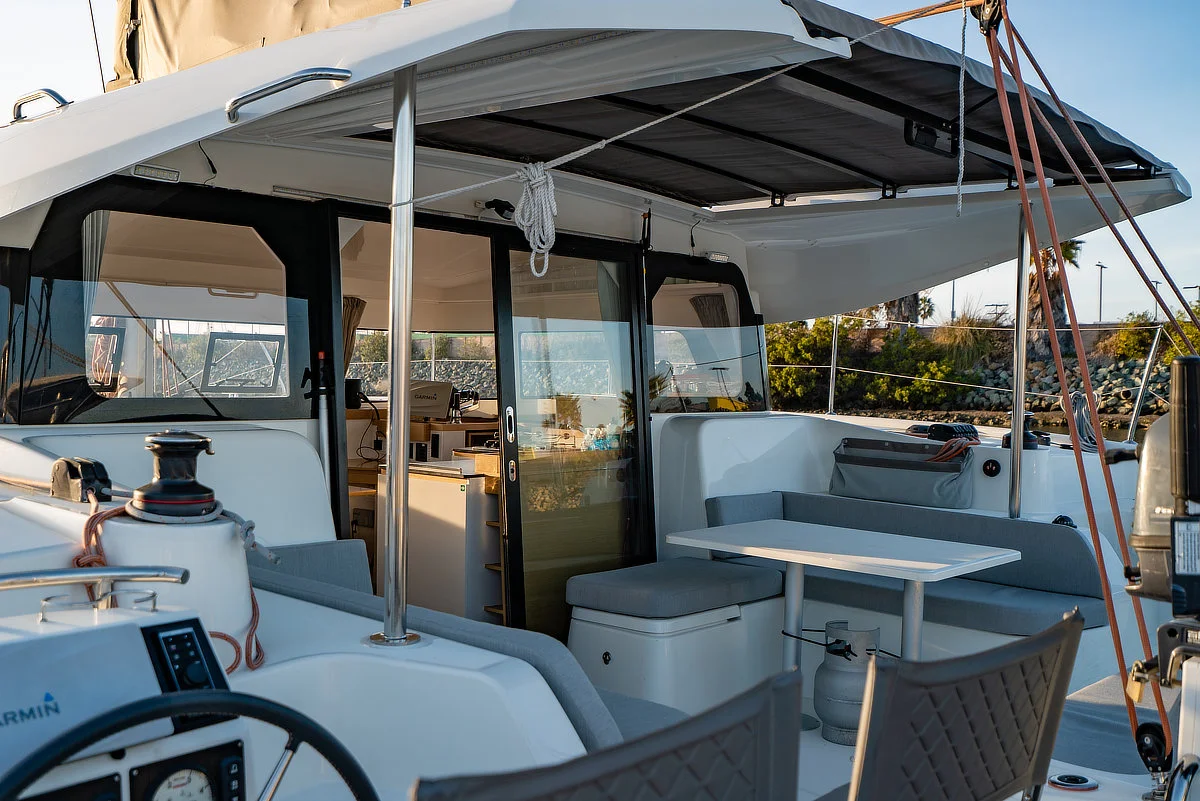
From Marina Puerto Escondido, the central island anchorages are reachable in a single morning, which means even a long-weekend charter can include several distinct anchorages. A captained multi-day charter lets the crew focus on the experience while our USCG-licensed captain handles routing, anchoring, and port clearance. Experienced sailors can also discuss a bareboat arrangement, subject to qualification review by the BPY team.
Watch scheduling, provisioning, and pacing all matter even on a coastal itinerary. The BPY team helps you build a route that matches your group's experience and interests, whether that is a relaxed snorkel-and-anchor circuit or a more ambitious push toward the southern island groups. Cooking simple, high-energy meals, maintaining consistent hydration, and pacing the day around the afternoon thermal winds are the practices that make a Cortez charter comfortable.
For sailors who want to build skills before chartering independently, our Bareboat Charters program gives experienced sailors practice managing a vessel in Southern California coastal conditions, which transfers directly to the kind of anchorage work the Cortez rewards.
Seamanship Skills That Make Sailing in the Sea of Cortez Go Smoothly
Sailing in the sea of cortez rewards crews who have invested in fundamental seamanship before leaving the dock. The most common challenges in the Cortez are Norte events requiring fast anchoring decisions, shallow-water navigation through the southern island groups, and the self-sufficiency that remote anchorages demand when the nearest fuel dock is 40 miles away.
Anchoring and Holding Ground
The Cortez bottom is predominantly sand and volcanic rock. Sand anchorages hold well with a properly set anchor and adequate scope, but rocky patches in island channels can allow drag during Norte conditions. We recommend a minimum 7:1 scope on a chain-only rode in protected anchorages, and carrying a secondary anchor on all-chain rode for overnight stops in more exposed positions. Reading the bottom from water color, depth sounder output, and pre-loaded satellite imagery before dropping the hook saves hours of resetting.
Tidal Awareness and Coastal Navigation
The tidal range in the northern Cortez reaches 20 feet at spring tide, generating powerful current in the island channels. In the Loreto corridor the range is 4 to 6 feet, but that is sufficient to strand a vessel on a sand flat or create 3-knot current in narrow passages at ebb. Chart accuracy in the Cortez varies significantly between publishers. The cruising guide "Sea of Cortez" by Shawn Breeding and Heather Bansmer (Seaworthy Publications) is the most detail-rich resource available and should be cross-referenced with current satellite imagery and depth sounder readings for final approach decisions in unfamiliar anchorages.
Weather Monitoring and Communications
The Sonrisa SSB net broadcasts daily weather summaries and fleet reports each morning on HAM radio frequencies, and is the primary communications resource for Cortez cruisers. Participation requires a valid HAM radio license at the Technician or General class level. Sailors who obtain their license before departure gain access to the most accurate localized weather information available in the region. SailMail and PredictWind Offshore are standard routing tools among bluewater crews. A satellite communicator with two-way messaging capability provides essential backup in areas where SSB propagation is poor and cellular coverage is absent.
Provisioning, Logistics, and Vessel Clearance for a Baja Charter
Loreto has provisioning options within easy reach of Marina Puerto Escondido, including grocery stores and a town market that supplies fresh produce throughout the season. Provisioning for a 10-day island cruise from a Loreto base is manageable, since the town caters to cruisers and the marina is well supplied. On a BPY charter, you are welcome to bring your own food and drinks at no extra charge, or our team can coordinate catering and an onboard chef so your provisioning is handled before you arrive.
If you bring a foreign-flagged vessel of your own into Mexican waters, importation requires a Temporary Importation Permit for the vessel, a zarpe from each port of entry, and valid vessel documentation. The check-in process at Ensenada, Cabo San Lucas, or La Paz is well established for cruising yachts, but documentation requirements and fee structures change periodically. Verify current requirements directly with the Mexican Secretaria de Marina or a current edition of a recognized cruising guide before departure. Chartering the BPY Loreto fleet removes most of this clearance burden, since the vessels are already cleared and based at Marina Puerto Escondido.
Frequently Asked Questions
What is the best time of year for sailing in the Sea of Cortez?
November through April is the primary cruising season. This window avoids the June through October hurricane season and provides comfortable temperatures, active wildlife encounters including whale sharks and manta rays, and the most settled sea conditions overall. Winter Norte events can bring 25 to 45 knot northerly winds and require active weather monitoring, but the season rewards prepared crews with outstanding anchorage cruising conditions along the full length of Baja.
Where does a BPY Sea of Cortez charter start?
Our Loreto fleet is based at Marina Puerto Escondido, just south of Loreto. Most guests fly into Loreto International Airport and transfer to the marina the same day, then board Pelican Bleu, Mi Sueno, or Hamlet and begin sailing the central island anchorages without a long delivery passage.
What certifications are recommended before a bareboat Cortez charter?
The BPY team recommends ASA 101, 103, and 104 as a baseline for any sailor planning to charter a vessel independently, with multihull experience valuable given the catamaran fleet. Sailors who have completed structured coursework handle Norte arrivals, anchoring decisions, and systems questions with significantly more competence and composure than those relying solely on casual experience. Bareboat arrangements are subject to qualification review by the BPY team.
Is a captained charter or bareboat format better for first-time Cortez sailors?
A captained charter with an experienced USCG-licensed captain is the appropriate format for sailors who have not previously spent time in the Cortez. The captain manages weather routing, port clearance, anchoring decisions, and vessel systems, allowing the crew to focus on the experience and on gaining local knowledge. Bareboat formats are available to sailors with verified credentials, subject to qualification review by the BPY team.
Are catamarans suitable for Sea of Cortez cruising?
Catamarans perform very well in the Cortez, which is why the BPY Loreto fleet is catamaran-based. Shallow draft allows access to anchorages that deep-keel monohulls cannot reach, and the stable platform suits the downwind passages between island groups. Pelican Bleu (Bali 4.8) and Mi Sueno (Excess 11) are well suited to the central island circuit, while Hamlet (Leopard 46 power catamaran) covers ground efficiently for guests who want to maximize anchorage time.
Book Your Sea of Cortez Charter With the BPY Team
Our USCG-licensed captains have logged seasons in the Cortez and can help you plan a Loreto-based itinerary, match your group to the right vessel in the fleet, or connect you with coursework to prepare for blue-water sailing in the sea of cortez. Reach out through our Sailing Class Info page to discuss charter and training options with the Blue Pacific Yachting team.
Ready to get on the water?
Send us your group size and preferred date. We will confirm availability and walk you through the option that fits.